When Nintendo released the Super Mario Bros. and The Legend of Zelda Game & Watch anniversary color screen units, many bought them as desktop clock collectibles, only to have them end up gathering dust in a drawer after a few weeks.
Once the novelty of the few pre-installed games wears off, there isn't much reason to pick them up. The stock internal flash storage is tiny (just a few megabytes). Early modding methods required desoldering the original flash chip and swapping in a 16MB or 64MB chip to flash a few hundred NES or GB games.
To be honest, re-flashing the chip via a PC every time you wanted a new game was a bit tedious. Later on, the modding community developed hardware mods that add a MicroSD card slot right next to the battery compartment. Paired with optimized custom firmware, the little device finally feels like a fully functional pocket handheld.
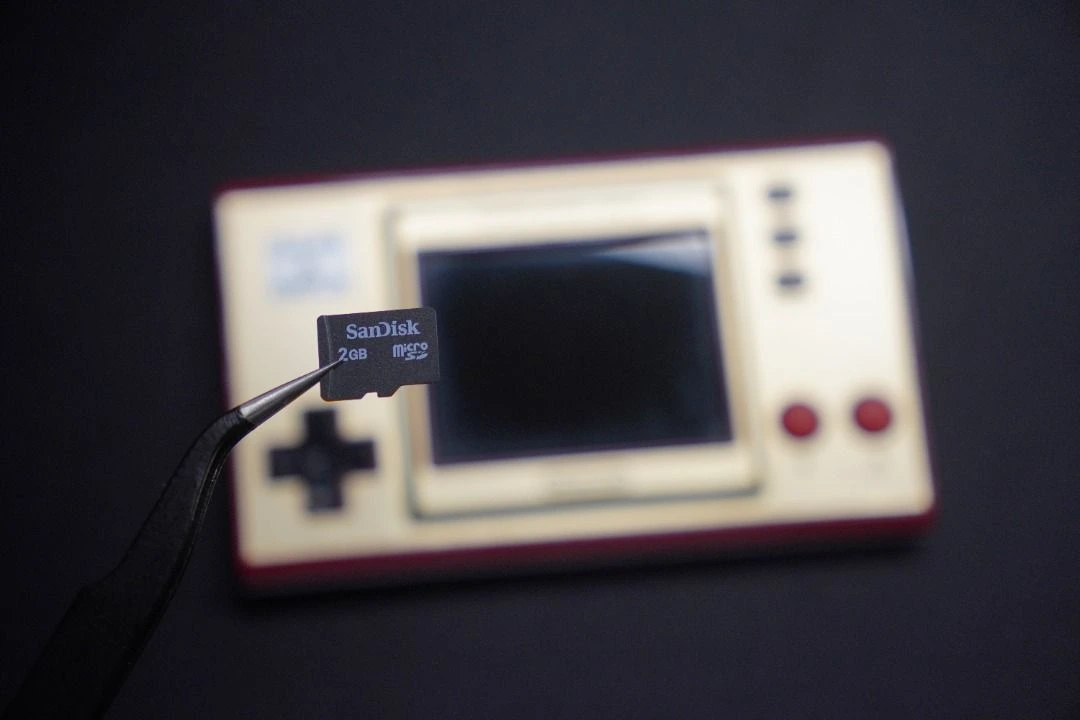
Why Add a MicroSD Card Slot?
Adding an SD card simplifies everything:
Unrestricted Capacity: No need to carefully curate which GB/GBC games fit within limited flash storage—just drag and drop entire 8-bit and 16-bit libraries onto the card.
No Disassembly for Flashing: Pop out the SD card, drag ROMs via a card reader on your computer, plug it back in, and play.
Broad Retro Console Support: Beyond the original Game & Watch LCD simulations, NES (Famicom), Game Boy, and Game Boy Color run smoothly on the hardware.
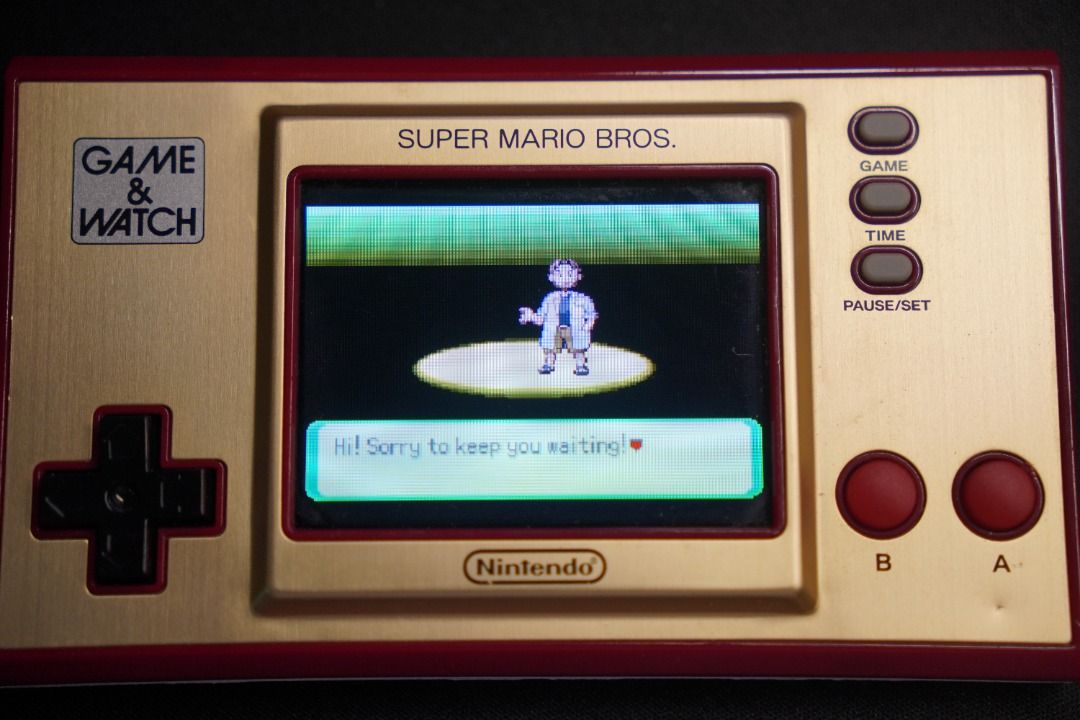
The Real Surprise: It Actually Runs GBA
Due to the extremely tight SRAM resources on the micro-controller (STM32H7), running GBA games seemed unrealistic early on. However, open-source developers rewrote emulator cores with highly efficient memory management, successfully bringing GBA games to life on the hardware.
A few objective observations from real-world testing:
Vibrant Display: While small, the Game & Watch IPS-like screen offers noticeably better color saturation and contrast than an un-modded original GBA or AGS-001 screen. Pixel art in games like The Legend of Zelda: The Minish Cap, Fire Emblem, or Pokémon looks sharp.
Ultra-Portable: Thin and weighing just a few hundred grams, it slips into a shirt pocket effortlessly—making it one of the smallest physical GBA-capable handhelds available.
The Ergonomic Trade-offs (To Be Frank): Because the casing is extremely slim, the button feedback feels soft, and there are no dedicated physical L/R shoulder buttons (requiring button combinations or custom mapping). If you play action-heavy titles like Metroid or Castlevania that rely heavily on shoulder buttons, the ergonomics can feel cramped. However, for RPGs, strategy games, or casual titles, the experience works well.
A Quick Modding Service Note
The modification process is straightforward in concept, but requires steady micro-soldering: it involves soldering fine jumper wires to small trace pads on a board the size of a postage stamp, then using a precision mill or cutter to create a clean SD card slot opening near the casing edge without damaging the shell aesthetics. Excessive soldering heat can easily lift or damage circuit traces.
If you happen to have an unused Game & Watch lying around and prefer not to invest in soldering or flashing tools yourself, you can send your unit in.
At DorayakiShop, we offer this niche hardware modification service, as well as modded complete device. Feel free to visit our carousell shop for more info.