
When retro gaming enthusiasts discuss Game Boy classics, titles like The Legend of Zelda: Link’s Awakening or Pokémon Red and Blue immediately take center stage. Yet, tucked away in Nintendo’s 1992 Japanese lineup lies a brilliant, under-appreciated gem that directly laid the groundwork for those legendary franchises: Kaeru no Tame ni Kane wa Naru (translated as For Frog the Bell Tolls).
Because it was exclusively released in Japan and never officially localized in English, this masterpiece remained an obscure "hidden gem" to Western audiences for decades. Only through dedicated fan translation efforts has the broader gaming community finally uncovered just how ahead of its time it truly was.
1. Historical Background: The Predecessor to Link’s Awakening
Released in September 1992 for the Original Game Boy, For Frog the Bell Tolls was co-developed by Nintendo R&D1 and Intelligent Systems—the same legendary team behind Fire Emblem and Metroid.
Its historical significance cannot be overstated:
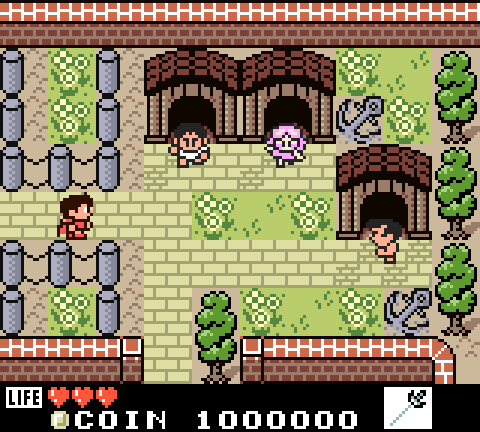
The Engine That Built Zelda: Nintendo built an ambitious top-down action-adventure engine for this game. Recognizing its fluidity and charm, the development team reused this exact game engine and visual style to create The Legend of Zelda: Link’s Awakening just one year later in 1993.
Shared DNA: From character sprite proportions and screen transitions to comedic NPC interactions, playing For Frog the Bell Tolls feels like discovering a long-lost parallel chapter of 8-bit Zelda history.
2. What Makes It Unique? (A Genre-Bending Masterpiece)
Unlike traditional action RPGs of the era that required grinding or complex inventory management, For Frog the Bell Tolls introduced a surprisingly modern, streamlined game design.
Grind-Free Auto-Combat: Battles occur automatically when touching an enemy, with damage calculated deterministically based on your stats (Health, Attack, Defense). If you lose, you don't grind levels; you explore the world to find heart containers, weapons, or armor upgrades.
Shifting Perspectives: The game seamlessly transitions between a top-down overworld map for exploration and side-scrolling 2D platforming sections inside dungeons and caves.
Form-Shifting Mechanics: The protagonist can transform between Human, Frog, and Snake forms. Each form possesses distinct abilities—frogs can jump high and talk to amphibians; snakes can slither through tight crawlspaces and bribe enemies; humans can wield weapons and heavy items. Solving environmental puzzles requires switching forms strategically.
3. Why It’s So Fun: Witty Humor and Pure Charm
Beyond its clever mechanics, the game shines through its narrative and tone.
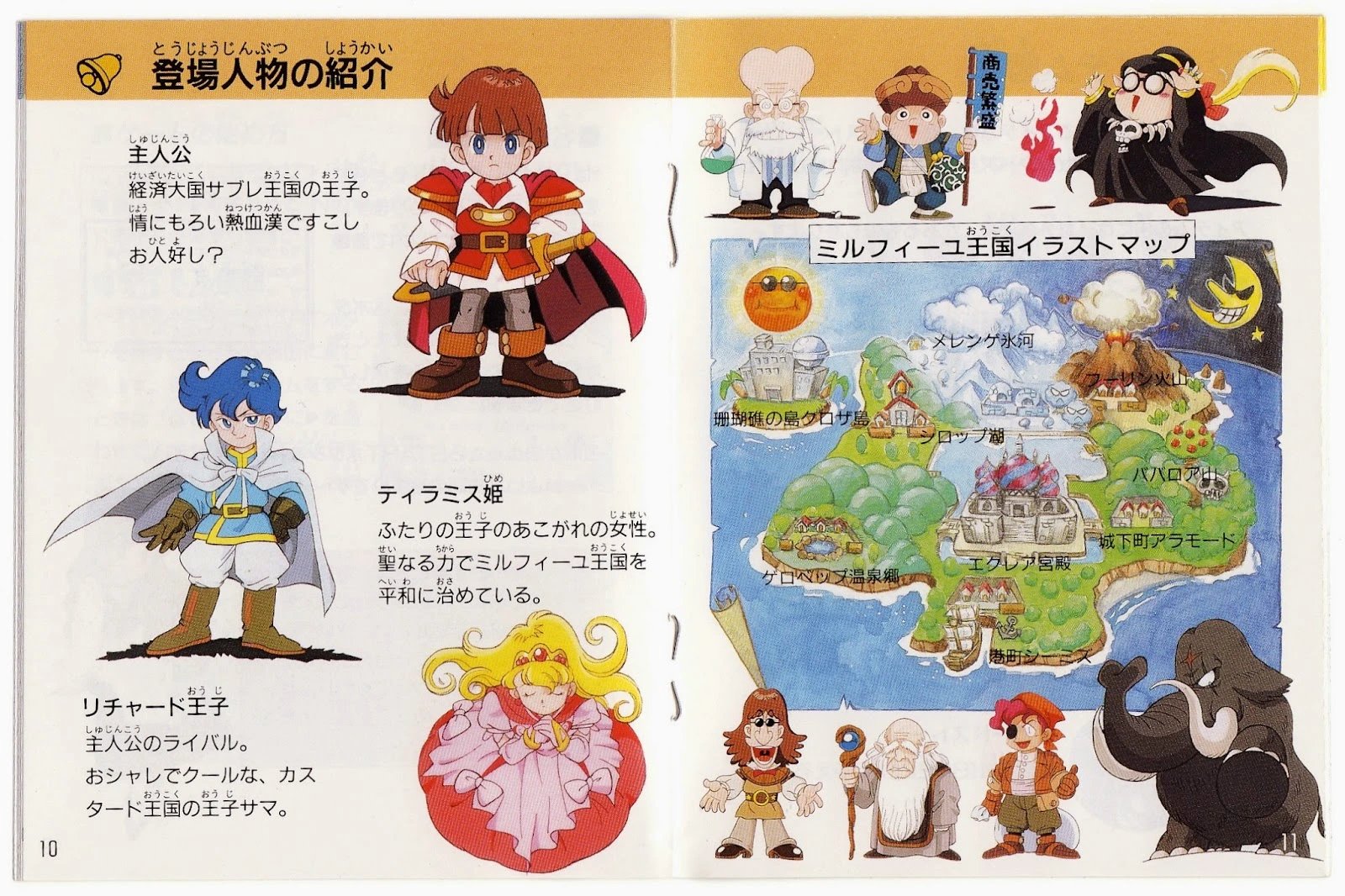
The story follows the Prince of the Richard Kingdom and his friendly rival, Prince Richard of the Custard Kingdom, on a quest to save Princess Tiramisu. Instead of a brooding, dark fantasy, the game delivers self-aware humor, slapstick comedy, and quirky character dialogue that still feels fresh and laugh-out-loud funny today.
Combined with a catchy 8-bit soundtrack and vibrant sprite animations, it offers a tightly paced 5-to-8-hour adventure with zero fluff or filler.
4. Experience This Hidden Gem on Real Hardware
While fan translation ROM patches allow us to read the game in English today, playing an 8-bit Game Boy classic on a modern PC monitor or smartphone screen simply doesn't do it justice.
The original monochrome Game Boy (or Game Boy Color / GBA) screen matrix, the tactile click of physical D-pads, and the warm chiptune audio coming straight from built-in speakers provide the authentic experience the developers intended back in 1992.
At DorayakiShop, we test and provide high-reliability GBA & GB/GBC flashcarts (flash memory cards) designed for seamless compatibility with real hardware. If you have a classic Game Boy sitting in a drawer, loading up a translated English ROM of For Frog the Bell Tolls onto a dedicated flashcart is the absolute best way to experience this overlooked piece of Nintendo history.
Dust off your handheld, fire up the classic chiptunes, and discover the forgotten legend in the palm of your hand.